Rodri
The pivot the whole system turns on. Rodri dictates tempo, screens the defence and is almost impossible to dispossess. Back to full fitness after a long-term injury, he is the single most important player to how Spain control a game.
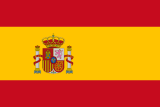
Spain arrive at the first 48-team World Cup as European champions and the purest expression of control football left in the sport. Luis de la Fuente's side still dominate the ball, but this is tiki-taka rebuilt for speed: the Rodri and Pedri spine sets the rhythm, Fabian Ruiz and Gavi vary the angles, and Lamine Yamal and Nico Williams turn patience into danger. The question for 2026 is whether keeping the ball still wins knockout football.
Spain still keep the ball better than anyone in the tournament, but de la Fuente has stripped out the sterile circulation that defined the late tiki-taka years and replaced it with a sharper, more direct version of the same idea.
The principles are intact: short passing, positional rotations, numerical superiority in build-up and a refusal to give the ball away cheaply. What has changed is the purpose. Possession is now a platform rather than a goal in itself. Spain pin opponents back, then attack with pace down the flanks the moment a gap appears. That blend of control and verticality is exactly what carried them to Euro 2024 with the best attack in the tournament.
It matters because the criticism of old Spain was that they could dominate the ball and still not score. This version is built to convert dominance into chances, which is the difference between a side that controls games and a side that wins them.
Every Spain possession sequence runs through the centre of the pitch, and this is where the squad is deepest. The Ballon d'Or winner anchors a midfield with a controller, a metronome and a runner for every situation.
The pivot the whole system turns on. Rodri dictates tempo, screens the defence and is almost impossible to dispossess. Back to full fitness after a long-term injury, he is the single most important player to how Spain control a game.
The metronome. Pedri rarely gives the ball away and constantly finds the next pass that moves the opponent, the player who keeps Spain's possession purposeful rather than static.
Press resistance and line-breaking passing from a Champions League winner. Fabian gives Spain a deeper-lying creator who can carry the ball through pressure and arrive late in the box.
Depth that protects the identity. Zubimendi is a like-for-like alternative to Rodri at the base, while Gavi brings energy, pressing and forward running, two very different ways to keep the midfield ticking.
Control means nothing without an end product, and Spain's answer is two of the best one-on-one wingers in the world. They are the reason patient build-up does not become harmless.
The generational talent. Yamal beats his man, draws defenders and creates from the right, the player most likely to unlock a deep block with a single moment of skill or a cut-back from the byline.
Direct, fast and devastating in transition. Williams stretches defences down the left and gives Spain a way to attack space the instant they win it back, the perfect foil to Yamal on the other flank.
The finishers between the lines. Mikel Oyarzabal, who scored the Euro 2024 final winner, and Dani Olmo give Spain movement and goals in the central spaces the wingers create.
Where it all starts. Cubarsi, alongside Aymeric Laporte, brings the ball out under pressure with the composure that lets Spain build from the back and pin opponents in their own half.
The expanded format is the new variable. With 12 groups of four, the eight best third-placed teams and a brand-new Round of 32, the champions may play up to eight matches in a North American summer.
In some ways this suits Spain perfectly. A team that controls the ball controls the workload: the opponent does the chasing, and keeping possession in heat and humidity is a way of resting without it. Against the run of weaker sides the expanded field throws up, Spain's ability to dominate and tire teams is a genuine edge across a long tournament. For the full picture of how the new structure works, see our 2026 format explainer.
The flip side is the maths of knockout football. More rounds mean more single games where one defensive lapse, one set-piece or one inspired goalkeeper can end a run, and a possession side that dominates without scoring is always one mistake from going out. That is the tension Spain must manage, and why the Yamal and Nico Williams cutting edge matters even more in 2026 than the control that creates it.
Spain are in Group H with Uruguay, Saudi Arabia and tournament debutants Cape Verde, three very different tests of whether possession football travels.
Three different problems and a system designed to solve each in its own way. For the full group picture, read our Group H guide with fixtures, venues and predictions, and the complete Spain squad guide.
No team in 2026 controls a football match like Spain. France, England and Brazil carry more raw power in transition, but none can dictate tempo and space the way de la Fuente's side can.
The case for Spain is that they have rebuilt the possession game without losing it: the control of the tiki-taka era is still there, but it now comes with verticality and two match-winning wingers attached. If a possession side is going to win this tournament, it is this one. The case against is simply the nature of knockout football, where a month of dominance can be undone in ninety minutes by a single moment. Spain are the favourites precisely because they have built the cutting edge that the old version lacked. Expect possession to be the platform, and Yamal to be the difference.
Spain are one of 48 nations heading to the 2026 World Cup. Explore the rest of the WorldCuply.com guide:
Luis de la Fuente's official 26, the headline selections and the system that carried Spain to Euro 2024.
See the squad ›Spain, Uruguay, Saudi Arabia and Cape Verde: the full fixtures, venues, dates and a prediction.
Open Group H ›Our data-led power ranking of the 2026 contenders, the dark horses, and a single prediction.
See the ranking ›The top-scorer contenders and odds, including Lamine Yamal and the favourites for 2026.
See the race ›Squad, fixture and venue details were checked against official and authoritative sources:
WorldCuply.com is the premium .com for 2026 World Cup content, coverage and commerce. The listing price rises $100 every day until kickoff on 11 June 2026. Every day you wait, the ask goes up.